
Cleveland, Ohio

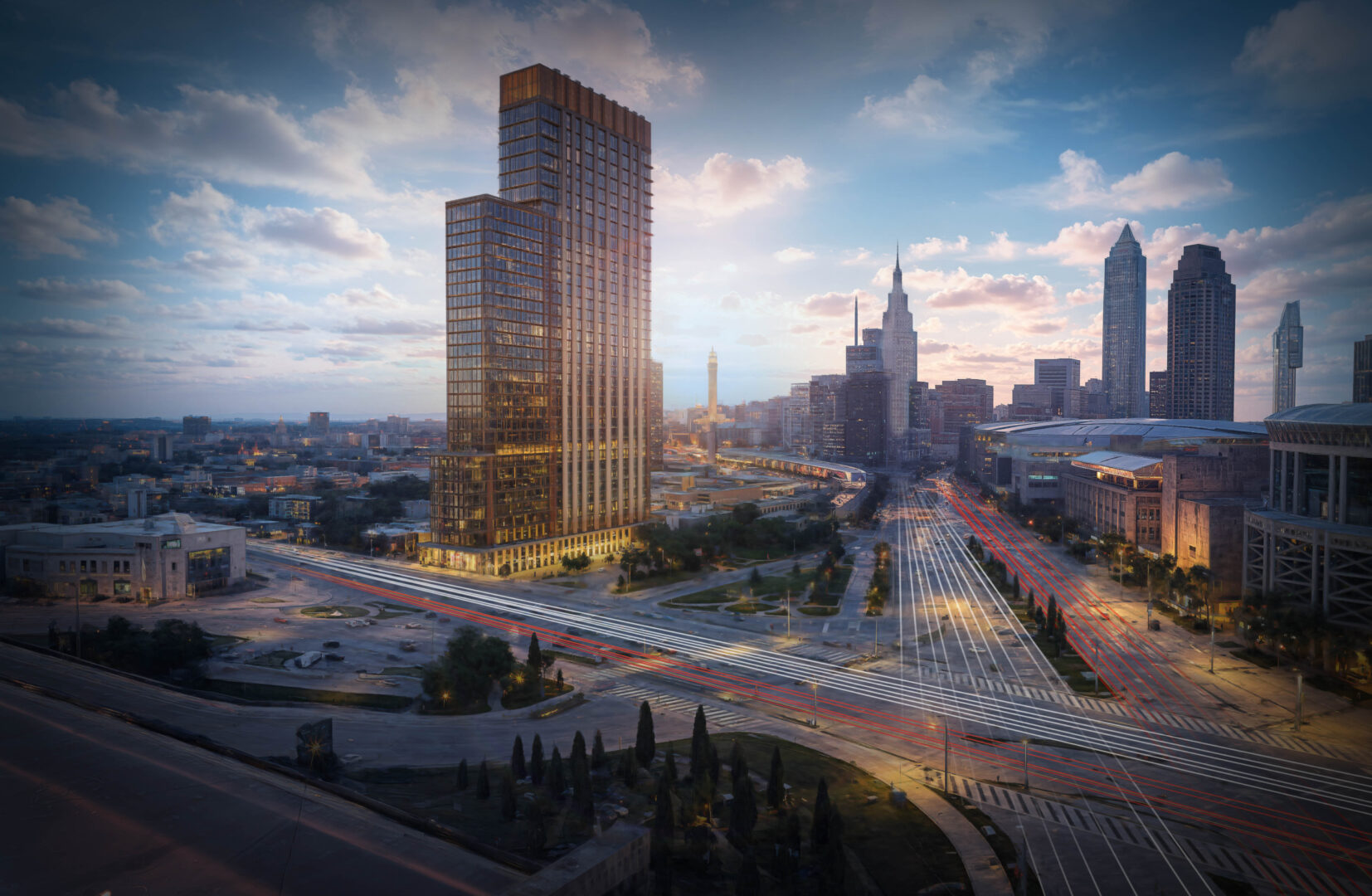


Iconic tower. Industrialist memorial. City gateway. Symbol of revival.
Cleveland’s rise as an industrial powerhouse in the 19th and early 20th centuries stemmed from its strategic location and abundant resources. The opening of the Ohio and Erie Canal in 1832 connected the city to both the Great Lakes and the Ohio River, making it a vital transportation hub. By mid-century, Cleveland became central to coal, iron, and oil refining. The discovery of iron ore in Minnesota and cheap shipment across the Great Lakes powered its steel industry, while John D. Rockefeller’s founding of Standard Oil in 1870 established Cleveland as a leader in petroleum.
Railroads, that run through our site, reinforced the city’s dominance, linking industries in steel, shipbuilding, and machinery. Immigrants provided the labor force, shaping Cleveland’s cultural and social fabric. By the early 20th century, the city was the nation’s “Sixth City,” producing steel, automobiles, and electrical equipment that fueled America’s growth and built enduring civic institutions.
By 1980, that industrial base had faded, and Cleveland has been striving to redefine itself amidst the struggling “rust belt” of America. The 21st century will see the revival of Cleveland as a diverse economy and resurgent manufacturing hub. We look for a bold statement that recalls Cleveland’s majesty yet announces a new path towards prosperity. Guardian Yards is a symbol of this rebirth, an iconic tower completing the city gateway into downtown.
The developer had a vision for a project that could connect the Industrial Flats to the Gateway district with an exciting mix of housing, hospitality and retail components. Bowen conceived Guardian Yards as a Transit-Oriented Development (TOD) adjacent to the Terminal Tower in the Gateway District. The designed high-rise tower integrates with existing GCRTA light rail train to forge connections to new retail, multi-family, and hospitality components near the two downtown stadiums.
The site posed several logistical challenges. GCRTA tracks run through the middle of the site, which sits on a downward slope. The site also has a tight footprint, bordered on all sides by infrastructure. The Hope Memorial Bridge, headed by the iconic Guardians of Traffic statues that inspired the team’s name, runs to the east of the tower. The Eagle Bridge to the west of the tower creates a new connection between the Gateway and new riverfront redevelopment. The tower blends steel, bronze, and glass to create a feel that is modern and elegant while nodding to the Art Deco design of the iconic Guardians of Traffic statues.
Size
N/A
Related Projects

Get In Touch
If you’re interested in working with Bowen on your multi-family project, reach out to Kyle Hulewat, Director of Design.